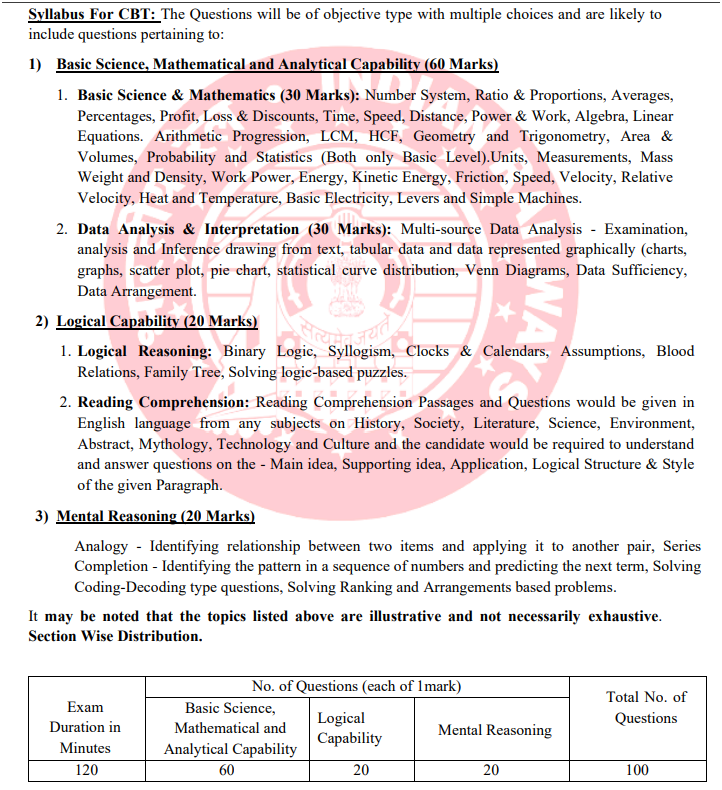
RRB Station Master Syllabus 2026: The Railway Recruitment Board (RRB) has advertised 1,265 posts for the recruitment of Station Master (Level 6 under 7th CPC) across various railway zones. Candidates who are preparing for the posts must prepare official syllabus topics to score good rank in upcoming CBT examination. The CBT exam consists of 100 questions for 120 minutes with a negative marking of 1/3 for each incorrect answer. The CBT is of screening nature and the standard of questions for the CBT will be in conformity with the educational standards. The exact exam schedule, reporting time, venue & other details will be notified separately on the official website @rrbapply.gov.in. In this article, we’ll provide you RRB Railway Station Master Syllabus topics, breakdown (what to read in each specific topic) for candidates preparation. For more details, read the complete article.
RRB Railway Station Master Syllabus
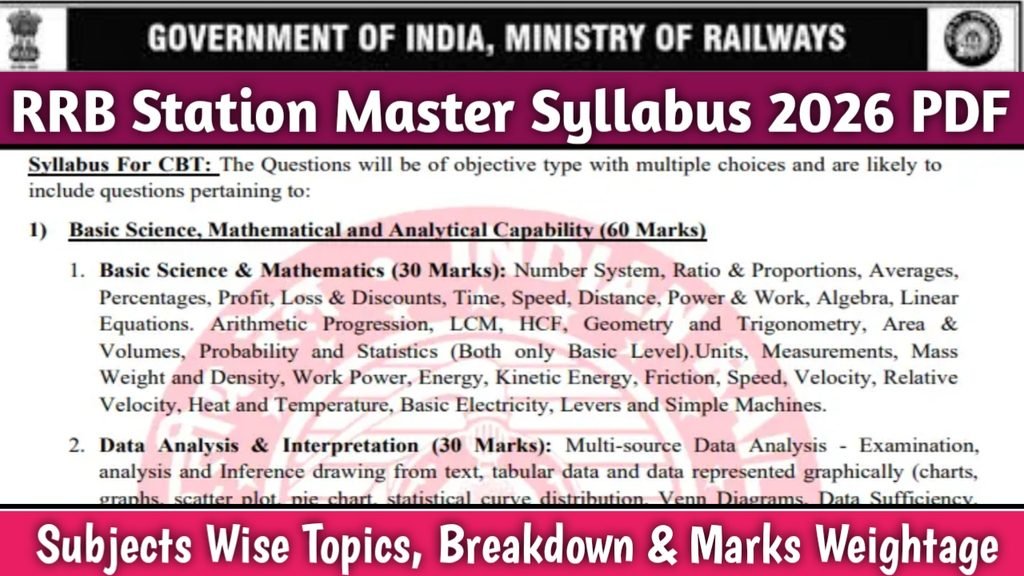
The RRB Station Master Syllabus includes Basic Science and Mathematics, Logical Capability & Mental Reasoning. The questions will be of objective type with multiple choices & are likely to include questions pertaining to above areas. The topic wise syllabus are given below;
Marks Weightage
| Subject / Section | Marks |
|---|---|
| Basic Science & Mathematics | 30 |
| Data Analysis & Interpretation | 30 |
| Logical Capability | 20 |
| Mental Reasoning | 20 |
| Total | 100 Marks |
Basic Science & Mathematics
Mathematics
- Number System
- Ratio and Proportions
- Averages
- Percentages
- Profit, Loss and Discounts
- Time, Speed and Distance
- Power and Work
- Algebra
- Linear Equations
- Arithmetic Progression
- LCM (Least Common Multiple)
- HCF (Highest Common Factor)
- Geometry and Trigonometry
- Area and Volumes
- Probability and Statistics (Basic Level Only)
Basic Science
- Units and Measurements
- Mass, Weight and Density
- Work, Power and Energy
- Kinetic Energy
- Friction
- Speed and Velocity
- Relative Velocity
- Heat and Temperature
- Basic Electricity
- Levers and Simple Machines
Data Analysis & Interpretation
- Multi-source Data Analysis
- Examination of Data
- Analysis of Data
- Inference Drawing from Text
- Tabular Data
- Graphical Data Interpretation
- Charts
- Graphs
- Scatter Plots
- Pie Charts
- Statistical Curve Distribution
- Venn Diagrams
- Data Sufficiency
- Data Arrangement
Logical Reasoning
- Binary Logic
- Syllogism
- Clocks & Calendars
- Assumptions
- Blood Relations
- Family Tree
- Solving Logic-Based Puzzles
Reading Comprehension
- Reading Comprehension Passages and Questions in English
- History
- Society
- Literature
- Science
- Environment
- Abstract
- Mythology
- Technology
- Culture
- Main Idea
- Supporting Idea
- Application
- Logical Structure & Style of the Given Paragraph
Mental Reasoning
- Analogy
- Identifying Relationships Between Two Items
- Applying Relationships to Another Pair
- Series Completion
- Identifying Patterns in a Sequence of Numbers
- Predicting the Next Term
- Coding-Decoding
- Ranking-Based Problems
- Arrangement-Based Problems
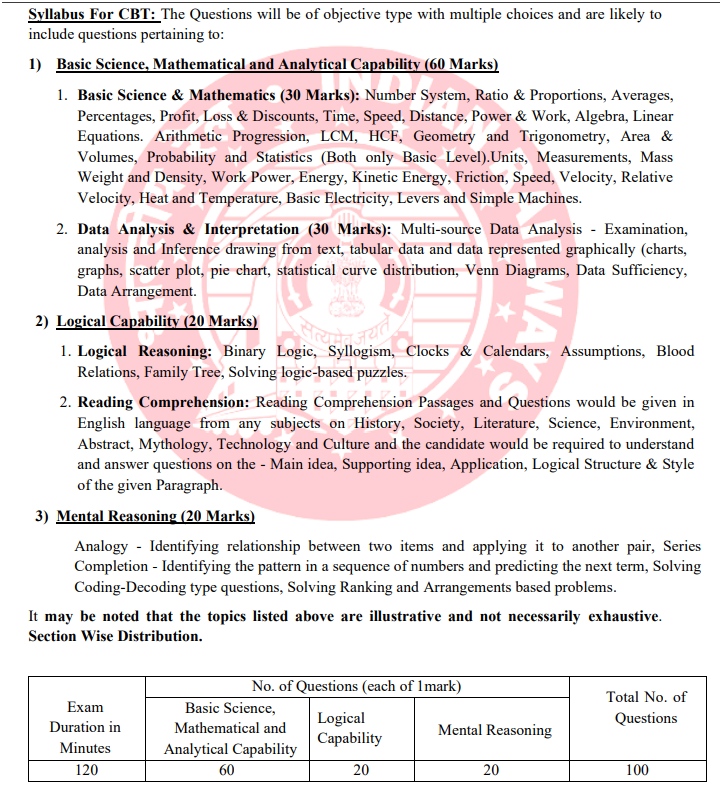
RRB Railway Station Master Syllabus Breakdown (What to Read in Each Specific Topic)
RRB Railway Station Master Syllabus Breakdown: The official syllabus includes topics covering Basic Science, Mathematics, Data Analysis & Interpretation, Logical Capability and Mental Reasoning. This detailed breakdown helps candidates identify exactly what to study under each topic, understand the important concepts and prepare systematically for the examination according to the official marks distribution.
Note: This syllabus breakdown is prepared for study and preparation purposes only. It is not an official syllabus breakdown, and the detailed subtopics may vary from the official examination notification.
Basic Science & Mathematics
Number System
- Natural, whole, integers, rational and irrational numbers
- Even and odd numbers
- Prime and composite numbers
- Positive and negative numbers
- Divisibility rules
- Factors and multiples
- Fractions and decimals
- BODMAS/DMAS
- Simplification
- Square roots and cube roots
- Remainder-based questions
Ratio and Proportions
- Ratio and its properties
- Simplification of ratios
- Equivalent ratios
- Proportion
- Direct proportion
- Inverse proportion
- Continued proportion
- Dividing a quantity in a given ratio
- Partnership-based ratio questions
Averages
- Arithmetic mean
- Average of numbers
- Average of consecutive numbers
- Average of ages
- Average of marks
- Average of groups
- Finding missing values using averages
- Change in average when a number is added or removed
Percentages
- Percentage conversion into fractions and decimals
- Percentage increase and decrease
- Successive percentage changes
- Percentage of a quantity
- Population increase and decrease
- Marks and percentage questions
- Comparing quantities using percentages
Profit, Loss and Discounts
- Cost price (CP)
- Selling price (SP)
- Profit and loss
- Profit and loss percentage
- Marked price (MP)
- Discount and discount percentage
- Successive discounts
- Finding CP, SP or MP
- False weight and basic commercial arithmetic
Time, Speed and Distance
- Speed, distance and time formulas
- Unit conversion
- Average speed
- Relative speed
- Problems on trains
- Problems on boats and streams
- Meeting and overtaking problems
- Distance covered at different speeds
Power and Work
- Work and efficiency
- Work done by individuals
- Combined work
- Work and time relationship
- Efficiency-based problems
- Men, women and workers-based questions
- Pipes and cisterns
- Basic power calculations
Algebra
- Algebraic expressions
- Variables and constants
- Algebraic identities
- Addition, subtraction and multiplication of expressions
- Factorisation
- Simplification of algebraic expressions
- Basic algebraic fractions
- Substitution of values
Linear Equations
- Linear equations in one variable
- Linear equations in two variables
- Solving simple equations
- Word problems based on equations
- Age-related equations
- Number-based equations
- Basic simultaneous equations
Arithmetic Progression (AP)
- Meaning of arithmetic progression
- First term
- Common difference
- General term
- Finding missing terms
- Sum of terms
- Identifying arithmetic sequences
LCM (Least Common Multiple)
- Prime factorisation method
- Division method
- Finding LCM of two or more numbers
- LCM of fractions
- Applications of LCM
- Problems involving repeating events
HCF (Highest Common Factor)
- Prime factorisation method
- Division method
- Finding HCF of two or more numbers
- HCF of fractions
- Applications of HCF
- Problems involving maximum equal grouping
Geometry and Trigonometry
- Lines and angles
- Types of angles
- Parallel lines and transversals
- Triangles and their properties
- Congruence and similarity
- Quadrilaterals
- Circles and their basic properties
- Pythagoras theorem
- Basic trigonometric ratios: sin, cos and tan
- Standard trigonometric values
- Basic trigonometric identities
Area and Volumes
- Perimeter and area of square and rectangle
- Area of triangle
- Area of parallelogram
- Area of trapezium
- Area and circumference of circle
- Surface area and volume of cube
- Surface area and volume of cuboid
- Cylinder
- Cone
- Sphere and hemisphere
- Basic unit conversions
Probability and Statistics (Basic Level Only)
- Basic probability
- Sample space
- Simple events
- Probability of an event
- Mean
- Median
- Mode
- Range
- Reading basic statistical data
- Simple frequency distribution
Basic Science
Units and Measurements
- Fundamental and derived quantities
- SI units
- Length, mass and time
- Measuring instruments
- Unit conversions
- Basic dimensional understanding
- Accuracy and precision
- Scalar and vector quantities
Mass, Weight and Density
- Difference between mass and weight
- Units of mass and weight
- Gravitational acceleration
- Density
- Relative density
- Density-based numerical problems
- Floating and sinking
- Basic buoyancy
Work, Power and Energy
- Meaning of work
- Conditions for work done
- Work formula
- Power and its formula
- Units of work and power
- Different forms of energy
- Conservation of energy
- Work and power-based numerical questions
Kinetic Energy
- Meaning of kinetic energy
- Formula of kinetic energy
- Factors affecting kinetic energy
- Relationship between mass, velocity and kinetic energy
- Basic numerical problems
Friction
- Meaning of friction
- Types of friction
- Static friction
- Sliding friction
- Rolling friction
- Advantages and disadvantages of friction
- Factors affecting friction
- Methods of increasing and reducing friction
Speed and Velocity
- Distance and displacement
- Speed and velocity
- Average speed
- Average velocity
- Uniform and non-uniform motion
- Units of speed and velocity
- Basic motion-related numerical problems
Relative Velocity
- Meaning of relative velocity
- Objects moving in the same direction
- Objects moving in opposite directions
- Relative speed of moving objects
- Basic train-related applications
- Numerical problems
Heat and Temperature
- Difference between heat and temperature
- Units of heat and temperature
- Celsius, Fahrenheit and Kelvin scales
- Conversion between temperature scales
- Conduction, convection and radiation
- Thermal expansion
- Basic specific heat concepts
- Change of state
Basic Electricity
- Electric charge
- Electric current
- Potential difference
- Resistance
- Conductors and insulators
- Ohm’s law
- Series and parallel circuits
- Electrical power
- Basic electrical energy
- Circuit symbols
- Fuse and safety devices
- Simple numerical problems
Levers and Simple Machines
- Meaning of simple machines
- Types of levers
- First, second and third-class levers
- Fulcrum, effort and load
- Mechanical advantage
- Efficiency
- Inclined plane
- Pulley
- Wheel and axle
- Screw and wedge
- Everyday applications of simple machines
Data Analysis & Interpretation
Examination of Data
- Understanding the information provided
- Identifying relevant and irrelevant data
- Reading numerical and descriptive information
- Identifying relationships between different data sources
- Extracting facts from given information
Analysis of Data
- Comparing different values
- Identifying trends and patterns
- Finding maximum and minimum values
- Calculating differences
- Calculating ratios and percentages
- Identifying increases and decreases
- Interpreting numerical information
Inference Drawing from Text
- Reading short passages containing information
- Identifying facts and conclusions
- Drawing logical inferences
- Identifying statements supported by the passage
- Distinguishing between facts, assumptions and conclusions
- Understanding implied information
Tabular Data
- Reading tables
- Understanding rows and columns
- Single-table interpretation
- Multiple-table interpretation
- Comparing values
- Finding totals and averages
- Calculating percentages and ratios
- Identifying missing values
- Finding maximum and minimum values
- Table-based mathematical questions
Graphical Data Interpretation
- Understanding different graphical representations
- Reading values from graphs
- Comparing graphical data
- Identifying trends
- Calculating changes and differences
- Interpreting graphical information
Charts
- Understanding chart types
- Reading chart values
- Comparing categories
- Identifying trends
- Calculating totals and averages
- Chart-based percentage questions
Graphs
- Reading bar graphs
- Reading line graphs
- Understanding axes and scales
- Identifying maximum and minimum values
- Comparing multiple variables
- Finding changes over time
- Interpreting trends
Scatter Plots
- Understanding scatter plots
- Reading plotted points
- Identifying positive correlation
- Identifying negative correlation
- Identifying no correlation
- Understanding relationships between variables
- Identifying general patterns
Pie Charts
- Understanding sectors and angles
- Reading percentage-based pie charts
- Converting percentages into values
- Calculating sector angles
- Comparing categories
- Finding totals
- Solving questions involving multiple pie charts
Statistical Curve Distribution
- Understanding frequency distribution
- Reading frequency curves
- Understanding distribution patterns
- Identifying central values
- Understanding normal distribution at a basic level
- Reading simple statistical curves
- Interpreting data represented through curves
Venn Diagrams
- Understanding sets
- Union of sets
- Intersection of sets
- Difference of sets
- Complement of sets
- Two-set Venn diagrams
- Three-set Venn diagrams
- Problems involving common and distinct elements
- Finding the number of elements in different regions
Analytical Reasoning
- Understanding the question and required information
- Evaluating whether given statements are sufficient
- Identifying sufficient and insufficient information
- Solving questions using one statement
- Solving questions using two statements together
- Avoiding unnecessary calculations
- Determining whether a question can be answered with the available data
Data Arrangement
- Arranging information according to given conditions
- Numerical arrangement
- Ranking-based arrangement
- Order and sequence
- Linear arrangement
- Circular arrangement
- Arrangement of people or objects
- Identifying positions
- Identifying relationships between arranged elements
- Solving arrangement-based puzzles
Logical Capability
Binary Logic
- Understanding binary statements
- True and false statements
- Basic logical operators
- AND, OR and NOT
- Truth tables
- Conditional statements
- Logical implications
- Identifying valid and invalid conclusions
- Basic logical expressions
Syllogism
- Statements and conclusions
- All, some, no and some-not statements
- Universal and particular statements
- Venn diagram method
- Possibility-based conclusions
- Either-or conclusions
- Identifying valid conclusions
- Statement-based logical deductions
Clocks & Calendars
- Reading clock time
- Angle between hour and minute hands
- Angle calculations
- Clock hand movement
- Time gained or lost
- Coinciding hands
- Opposite positions of clock hands
- Basic clock-based problems
Calendars
- Days and dates
- Ordinary years and leap years
- Number of days in months
- Odd days
- Day of the week
- Finding the day of a given date
- Calendar repetition
- Basic date-based problems
Assumptions
- Understanding statements
- Identifying implicit assumptions
- Identifying necessary assumptions
- Distinguishing assumptions from conclusions
- Statement-based reasoning
- Evaluating whether an assumption is valid
- Identifying hidden premises
Blood Relations
- Basic family relationships
- Father, mother, son and daughter
- Brother and sister
- Grandparents and grandchildren
- Uncle and aunt
- Nephew and niece
- Cousins
- Maternal and paternal relationships
- Relationship-based questions
- Identifying the relationship between two people
Family Tree
- Drawing family trees
- Understanding generations
- Identifying male and female members
- Identifying parents and children
- Identifying siblings
- Identifying grandparents
- Understanding marriage relationships
- Solving multi-generation family puzzles
- Determining relationships from given conditions
Solving Logic Based Puzzles
- Understanding puzzle conditions
- Identifying constraints
- Logical elimination
- Ordering and sequencing
- Assignment-based puzzles
- Person-based puzzles
- Object-based puzzles
- Position-based puzzles
- Matching information
- Solving puzzles using tables
- Drawing conclusions from multiple conditions
Reading Comprehension
- Reading passages in English
- Understanding the central theme
- Identifying important information
- Understanding paragraph structure
- Identifying facts and opinions
- Understanding the author’s purpose
- Interpreting implied information
- Vocabulary in context
- Understanding tone and style
History
- Reading passages related to historical events
- Understanding historical developments
- Identifying causes and consequences
- Understanding chronological information
- Identifying important facts
- Drawing conclusions from historical passages
Society
- Social issues
- Social relationships
- Education and society
- Social development
- Community and institutions
- Understanding social problems
- Interpreting arguments related to society
Literature
- Reading literary passages
- Understanding themes
- Identifying characters
- Understanding the author’s message
- Interpreting literary language
- Identifying tone and style
- Understanding figurative expressions
Science
- Reading scientific passages
- Understanding scientific concepts
- Identifying facts and explanations
- Understanding cause and effect
- Interpreting scientific arguments
- Drawing conclusions from scientific information
Environment
- Environmental issues
- Pollution
- Climate change
- Natural resources
- Conservation
- Biodiversity
- Environmental protection
- Understanding environmental passages
Abstract
- Understanding abstract ideas
- Interpreting conceptual passages
- Identifying the central argument
- Understanding philosophical or theoretical ideas
- Drawing logical conclusions
- Interpreting unfamiliar concepts
Mythology
- Reading mythology-based passages
- Understanding characters and events
- Identifying themes
- Understanding symbolic meanings
- Interpreting moral lessons
- Drawing conclusions from mythological narratives
Technology
- Reading technology-related passages
- Understanding technological developments
- Identifying applications
- Understanding advantages and disadvantages
- Interpreting technical information
- Understanding technology-related arguments
Culture
- Cultural practices
- Traditions and customs
- Cultural diversity
- Cultural heritage
- Understanding cultural developments
- Interpreting cultural passages
- Identifying similarities and differences
Main Idea
- Identifying the central idea
- Finding the main theme
- Identifying the purpose of the passage
- Selecting the most appropriate title
- Distinguishing main ideas from supporting details
Supporting Idea
- Identifying supporting details
- Finding evidence for the main idea
- Understanding examples
- Identifying explanations
- Recognizing facts supporting an argument
- Distinguishing relevant and irrelevant information
Application
- Applying information from the passage
- Using concepts in new situations
- Drawing practical conclusions
- Understanding implications
- Solving passage-based problems
- Identifying appropriate applications of ideas
Logical Structure & Style of the Given Paragraph
- Understanding paragraph structure
- Identifying introduction, body and conclusion
- Understanding the sequence of ideas
- Identifying cause and effect
- Understanding comparison and contrast
- Recognizing arguments and counterarguments
- Identifying the author’s tone
- Understanding writing style
- Identifying logical connections between sentences
- Recognizing the purpose of different paragraphs
Mental Reasoning
Analogy
- Understanding relationships between words
- Identifying similarities and differences
- Word-based analogy
- Number-based analogy
- Letter-based analogy
- Object-based analogy
- Relationship-based analogy
- Completing analogy pairs
- Identifying the correct option based on a given relationship
Identifying Relationships Between Two Items
- Part and whole relationship
- Object and function relationship
- Cause and effect relationship
- Synonym and antonym relationship
- Person and profession relationship
- Animal and habitat relationship
- Tool and purpose relationship
- Classification-based relationships
- Identifying common characteristics
Applying Relationships to Another Pair
- Understanding the relationship in the first pair
- Identifying the underlying rule
- Applying the same rule to the second pair
- Completing missing terms
- Identifying the correct answer from options
- Solving word, number and letter analogies
Series Completion
- Number series
- Alphabet series
- Mixed number and alphabet series
- Identifying missing terms
- Completing sequences
- Finding the next term
- Finding incorrect terms
Identifying Patterns in a Sequence of Numbers
- Addition-based patterns
- Subtraction-based patterns
- Multiplication-based patterns
- Division-based patterns
- Increasing differences
- Decreasing differences
- Square number series
- Cube number series
- Prime number series
- Fibonacci series
- Alternating number patterns
- Mixed operation patterns
Predicting the Next Term
- Identifying the sequence rule
- Calculating differences between terms
- Identifying multiplication or division patterns
- Recognizing alternating patterns
- Finding missing numbers
- Predicting the next number
- Predicting the next letter
- Solving mixed series questions
Coding Decoding
- Letter coding
- Number coding
- Word coding
- Alphabet position-based coding
- Letter shifting
- Forward and backward alphabet movement
- Reverse alphabet coding
- Substitution coding
- Symbol-based coding
- Word-to-number coding
- Number-to-letter coding
- Identifying coding patterns
- Decoding coded words
- Finding codes for new words
Ranking and Arrangements
- Ranking from left and right
- Ranking from top and bottom
- Position of a person in a row
- Total number of persons
- Finding ranks
- Finding positions
- Identifying the middle position
- Comparing rankings
- Determining the number of persons between two individuals
- Solving rank-based numerical questions
Arrangement Based Problems
- Linear arrangement
- Row arrangement
- Ordering people or objects
- Arranging according to height
- Arranging according to age
- Arranging according to marks or scores
- Position-based arrangements
- Direction-based arrangements
- Identifying immediate neighbours
- Identifying elements at specific positions
- Solving arrangement-based puzzles
Important Links
| RRB Station Master WhatsApp Group | JOIN NOW |
| RRB Station Master Syllabus | Download PDF |
| Official Website | CLICK HERE |